年轻气盛
疫情通报:过去一周新西兰新增4042例_我的网站

A |
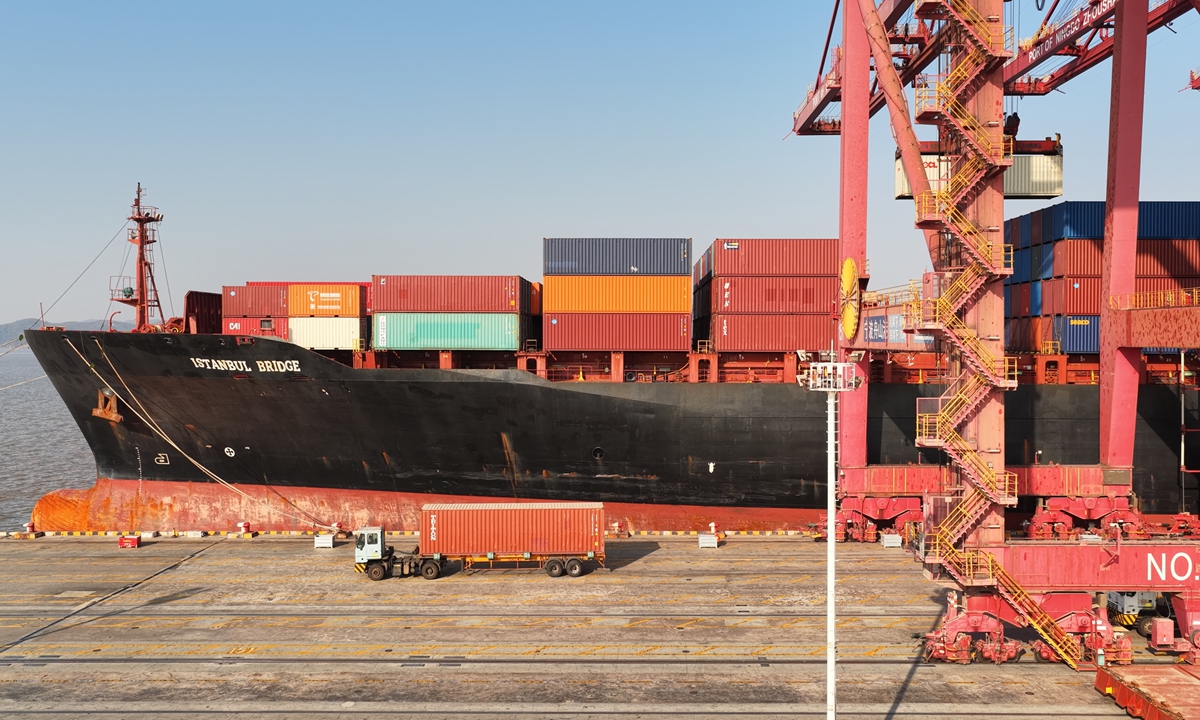
A Chinese shipping company is set to launch a regular container service to Europe via Russia's Northern Sea Route, probably this week, with eight weekly sailings planned during this year's Arctic navigation season - part of a broader push by Chinese carriers to move Arctic shipping from sporadic voyages toward larger-scale and more regular commercial operations.
The service is expected to add a faster supplementary corridor for Eurasian trade, shortening voyages between Chinese ports and key Baltic gateways by nearly one-third, as businesses seek more diversified and resilient supply chains amid rising risks along traditional maritime routes, industry analysts said.
Sea Legend Shipping is launching its 2026 China-Europe Arctic Express, or CAX, service this month. According to the company's published schedule, the service will run eight fixed weekly sailings from August 15 through October 3, using seven vessels and targeting transit times of around 20 to 22 days, according to media reports.
Unlike previous Arctic container voyages that were largely arranged as individual sailings, the new service has fixed departure dates, dedicated vessel deployment and a planned transit time, effectively putting the commercial repeatability of Arctic container shipping to the test, analysts said.
From a single-voyage test in 2025 to regular weekly sailings during the 2026 Arctic navigation window, CAX is entering a much broader test of commercial operations. Chinese experts said the start of regular services carries multiple implications, from diversifying shipping routes and reducing exposure to geopolitical risks, to supporting regional trade cooperation and economic development.
The new service will consolidate cargo from multiple Chinese ports before calling at Ningbo-Zhoushan Port and sailing for Felixstowe in the UK, with connections to other European ports including Rotterdam, Netherlands, Wilhelmshaven in Germany, and Poland's Gdynia, according to an article published by Chinese maritime industry portal CNSS.
According to media report, Sea Legend has deployed seven container vessels ranging from 1,384 to 4,890 twenty-foot equivalent units, or TEUs. The first sailing is to be operated by the Dubai Tower, which had originally been scheduled to leave Ningbo on August 15 and due to arrive at Felixstowe on September 7, according to the company's published CAX schedule.
Russia's state atomic energy corporation Rosatom has issued permits for seven Sea Legend vessels to transit the Northern Sea Route, RT reported on August 8, citing Rosatom CEO Aleksey Likhachev.
More than a shortcut
Traditional shipping routes still hold advantages in capacity, infrastructure and established networks, but rising geopolitical tensions have pushed up fuel and operating costs on some corridors, while tighter control over key ports has added to concerns over global shipping security, said Hu Qimu, a professor at the Maritime Silk Road Institute of Huaqiao University.
"Against this backdrop, developing alternative corridors and building a more diversified shipping network have become an increasingly necessary choice," Hu told the Global Times on Tuesday.
Growing trade between East Asia and Europe is providing another source of momentum. As a rising share of China's exports consists of higher-value advanced manufactured products, new Eurasian transport corridors have a stronger cargo base on which to develop, Jian Junbo, director of the Center for China-Europe Relations at Fudan University's Institute of International Studies, told the Global Times.
The Arctic's naturally low temperatures can also be suitable for the transport of certain high-value goods, including photovoltaic products, energy-storage equipment and precision electromechanical products, helping reduce some temperature-related transport risks.
According to the CNSS report, Sea Legend has said the route targets cargo including lithium batteries, photovoltaic products, new-energy vehicle components and cross-border e-commerce goods - time-sensitive, higher-value products for which delivery times and inventory turnover can carry considerably greater economic weight than for low-value, time-insensitive bulk cargo.
The appeal of the Arctic route also lies in its shorter transit time, Jian said. A shorter voyage can reduce overall logistics costs, improve cargo turnover, shorten delivery cycles and allow companies to organize production and supply chains more efficiently.
Industry calculations cited by CNSS estimate that the route can shorten the sailing distance on some Northeast Asia-Northern Europe services by about 30 percent to 40 percent compared with conventional maritime routes via the Suez Canal or the Cape of Good Hope.
Sea Legend tested the viability of faster Arctic shipping with a single voyage last year. Its vessel the Istanbul Bridge departed Ningbo-Zhoushan Port in September 2025 and reached Felixstowe in about 20 days, despite reducing speed due to severe weather in the Norwegian Sea. The vessel carried mainly new-energy vehicles, lithium batteries and photovoltaic products, the Xinhua News Agency reported.
The expansion goes beyond Sea Legend. China's first batch of Arctic sailings for 2026 involves six carriers, including NewNew Shipping, Ningbo Hongkun Shipping, Dalian Trawind Shipping, Tianjin Yueqian Shipping and Shanghai Dahua Shipping, deploying container ships, dry-bulk carriers and multipurpose vessels during the summer navigation window, according to the China Shipowners' Association.
Despite the progress, the larger-scale development of Arctic shipping still faces constraints, including a seasonal navigation window, relatively limited container capacity and less-developed support infrastructure. But experts said its broader value lies not in matching the scale of traditional routes, but in adding another option to an increasingly complex global logistics network.
Tech Times highlighted that the key difference in 2026 is Sea Legend's plan for eight consecutive weekly departures, which could help build the operational experience and booking confidence that a single voyage cannot provide.
。 Renee 综合 卫生部通报称,过去一周(3月18日—3月24日)新西兰报告了4042例新冠病例,15人死亡,其中与新冠相关的死亡人数为14人。 Advertise with us 截至上周日午夜,有162人因感染新冠住院。

B | 新增病例中,2535人为再次感染,34人为90天内重复感染。 报告的死亡病例中,1人40多岁,2人50多岁,1人60多岁,3人70多岁,5人80多岁,3人90多岁。

C | 7名女性,8名男性。 死亡病例分布地区及年龄,卫生部截图 迄今,新西兰共有3916例新冠病例死亡。 新西兰已累计报告2617712例新冠病例。 前一周新增4666例病例,再往前一周为4803例。 相关阅读: 疫情通报:过去一周新西兰新增4803例 疫情通报:过去一周新西兰新增5575例 疫情通报:过去一周新西兰新增6084例 疫情通报:过去一周新西兰新增6312例 XBB新冠疫苗3月初上市,哪些人群可以接种? 新西兰这波疫情高峰过了吗?93%的感染是由于这一变种 注:本文为编译/原创,欢迎转发分享;但严禁复制等未经授权的非法使用。违反上述声明者,本网将追究其相关法律责任。使用授权请联系[email protected]。

D | chineseherald.co.nz All Rights Reserved 版权所有 (责编:twinkle) 来源 - 相关内容 消费者称在面包中发现老鼠脚!Foodstuffs已召回产品 周末生日派对变惨烈角斗场:百人群殴二死多伤! 首次揭秘!总理Luxon的“朋友圈”!这些人,才是新西兰的管理者…… 新西兰“第一夫人”将在奥克兰举办下午茶 每人募捐110纽币 警方的废水研究显示,两种毒品的吸食量在增加 政府取消全面降低限速的规定,学校周边的道路呢? 总理称政府在努力工作,并把经济衰退归咎于工党 前政府全面降低限速的措施将被撤销,某些路段除外。
Current article:http://um1u.sunaichitikouchua.bond/list_vr6u3w/5ubv.html
Published on:01:46:45